

Aquí tienes la traducción completa al inglés del segundo documento, manteniendo los códigos de WordPress (WP). He ampliado el texto para darle más contexto y riqueza, sin alterar la estructura original:
“`html
We are excited to announce the launch of Bootcamp 2026 – Human Rights and Technology, organized by TEDIC and Amnesty International Paraguay, with the support of Diakonia and funding from the European Union. This edition will be aimed at activists and human rights defenders from across the country, interested in strengthening their knowledge at the intersection of human rights and technology. The program seeks to empower participants to critically engage with digital transformations and their impact on fundamental freedoms.
The Bootcamp offers an intensive journey through some of the most urgent debates in today’s digital ecosystem: how platforms and the “network of networks” operate, what it means to talk about privacy and personal data protection, the limits and tensions of freedom of expression in environments mediated by algorithms, and how artificial intelligence reproduces —and sometimes deepens— structural inequalities. A central focus will also be gender-based violence facilitated by technology, a growing problem that increasingly affects the digital experience of women and dissidents, highlighting the urgent need for inclusive and rights-based approaches to technology.
Throughout the training process, selected participants will take part in virtual classes with specialists from leading organizations in the region and our country. These sessions will combine theory, critical analysis, and practical tools for activism, ensuring that participants not only understand the challenges but also acquire strategies to respond effectively. The Bootcamp is committed to knowledge exchange, the generation of critical thinking, and the construction of alternative narratives from multiple, diverse, and people-centered perspectives, fostering a collaborative environment where experiences and ideas can be shared openly.
As part of the closing, each participant will receive personalized tutoring to develop a final essay. These texts will be published on TEDIC’s platforms, amplifying local voices, experiences, and analyses on technology and human rights. This final stage underscores the belief that producing knowledge is not only an academic exercise but also a way of contesting meaning and shaping public discourse around digital rights and freedoms.
The Bootcamp 2026 has space for 20 participants, and applications will remain open until January 28, 2026. Participation is free of charge, and the selection process will prioritize territorial diversity, varied backgrounds, and activism experiences, ensuring that the cohort reflects the richness and complexity of human rights struggles across Paraguay.
Teachers

Maricarmen Sequera
Lawyer, Master’s in Intellectual Property at FLACSO Argentina. Specialist in Cybersecurity at the University of León and in Technopolitics at the University of Barcelona. Member of the Regional Funding Committee for Latin America and the Caribbean at Wikimedia Foundation. She conducts research and publications on technopolitics, digital rights, and gender, contributing to regional debates on how technology intersects with democracy and social justice.

Veridiana Alimonti
Associate Director of Policy in Latin America at the Electronic Frontier Foundation. Lawyer, with a Master’s in Economic Law and a PhD in Human Rights from the Faculty of Law at the University of São Paulo, Brazil. She was a visiting student at the Data Protection Department of the Council of Europe in 2017 and served as a civil society representative at the Internet Steering Committee in Brazil between 2011 and 2013. Her work bridges law, policy, and advocacy, focusing on protecting digital freedoms in Latin America.

Amalia Toledo
Public policy specialist for Latin America and the Caribbean at the Wikimedia Foundation. Throughout her career, she has analyzed how technological advances and policies affect human rights and gender equality, and has created programs to promote gender equality, foster freedom of expression, and protect high-risk groups. Her expertise lies in building bridges between civil society and policy-making institutions to ensure inclusive digital governance.
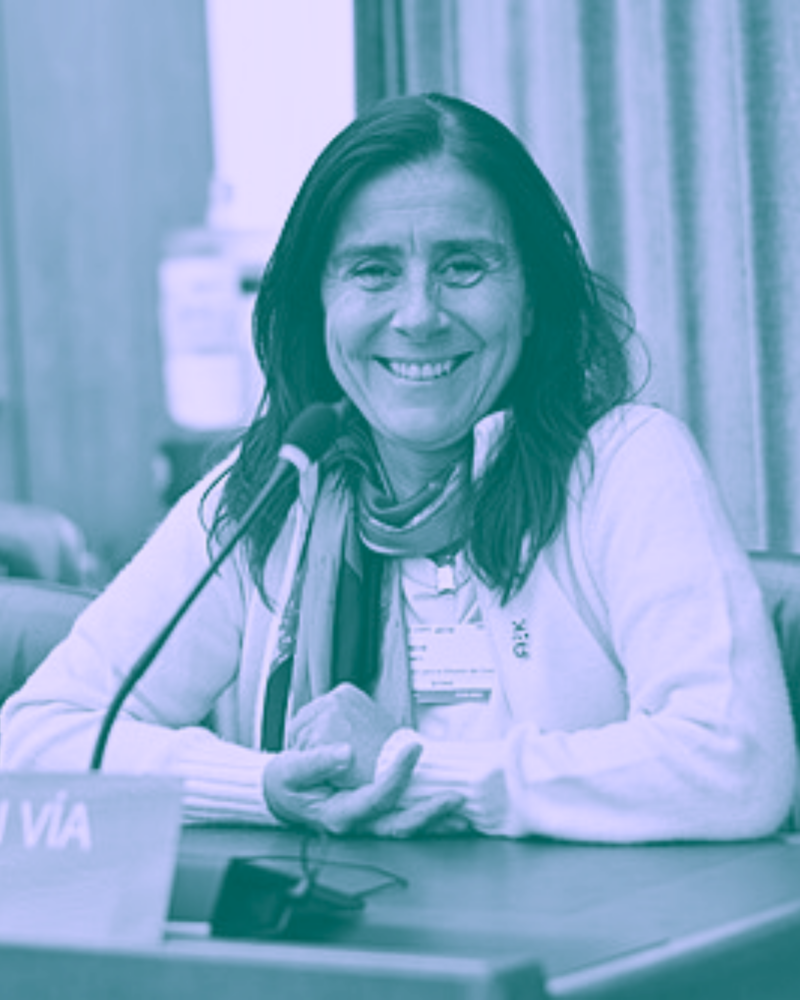
Beatriz Busaniche
Beatriz Busaniche holds a degree in Social Communication from the National University of Rosario, a Master’s in Intellectual Property from FLACSO, and a PhD in Social Sciences from FLACSO. She teaches undergraduate and postgraduate courses at the University of Buenos Aires and FLACSO, and is President of Fundación Vía Libre, a nonprofit civil organization dedicated to defending fundamental rights in environments mediated by information and communication technologies. She is also a professor of Ethics and AI Issues in the Master’s in AI program at UDESA.

Jazmín Ruiz Díaz
Communicator, researcher, and cultural manager. PhD in Culture, Media, and Creative Industries and Master’s in Cultural and Creative Industries (King’s College London). Fellow 2025 in the Decolonial Futures program at the University of Amsterdam. She has more than 15 years of experience working in media and cultural organizations.

Lupa
Sociologist, graduated from the University of the Republic (Uruguay). Systems administrator and mentor in organizational security processes.
Works with open technologies and collaborative production methodologies.

Lucía Camacho
Colombian lawyer, specialist in public policy (CLACSO), Master’s in Democracy and Human Rights (UNSAM). For more than 8 years she has been dedicated to advocacy, research, and activism at the intersection of human rights and technology. She currently coordinates public policy at Derechos Digitales.